Job Alert WhatsApp Group Links: How to Find Real Job Groups and Avoid Scams
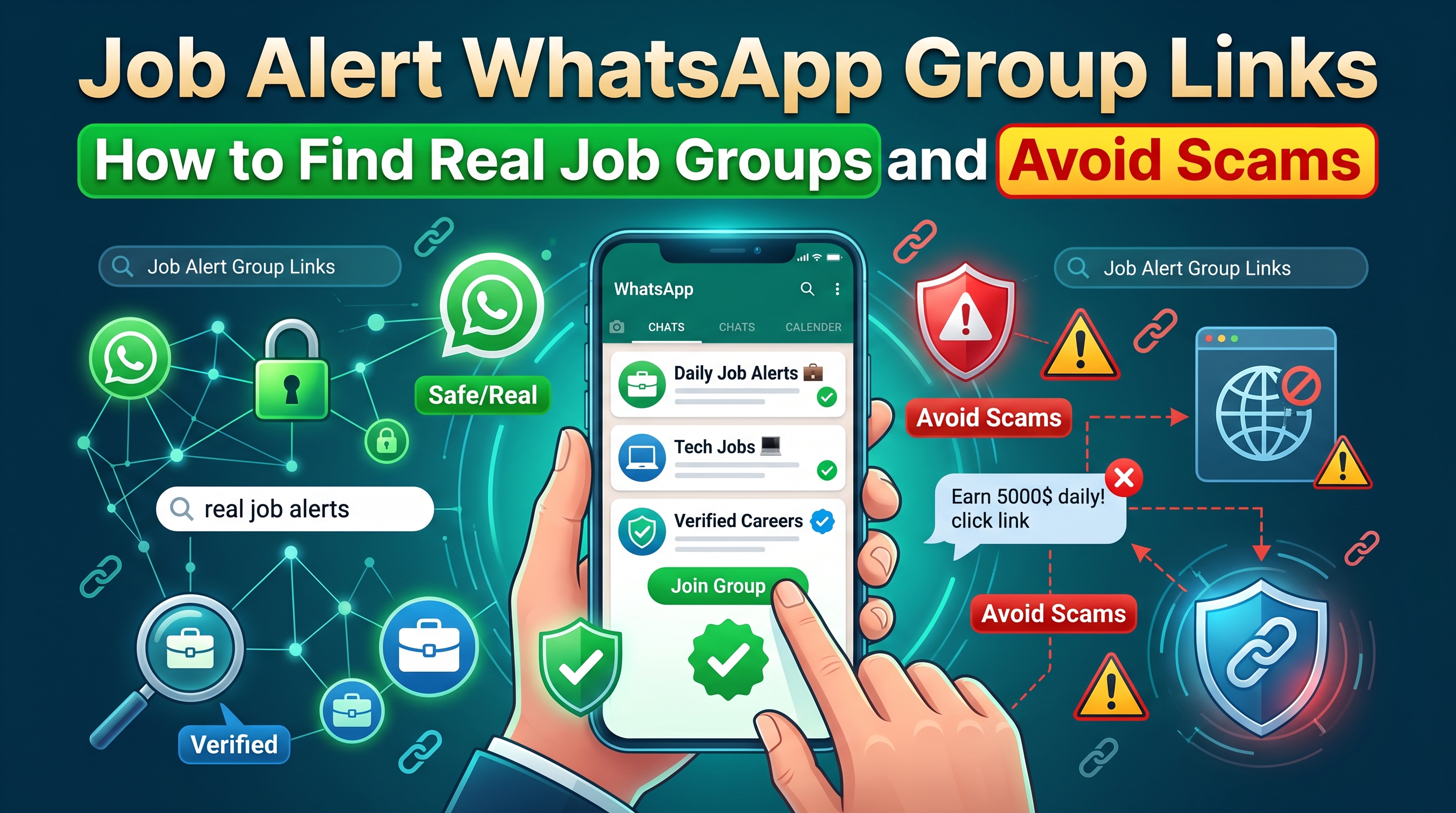
Job Alert WhatsApp Group Links: How to Find Real Job Groups and Avoid Scams
Job alert WhatsApp group links can be a fast way to hear about vacancies, walk-in drives, and exam notifications, but only if the group is run honestly and you know how to filter what it posts. Look for groups with a clear focus, posts that name the employer and point to an official application page, and no requests for money. Treat every group as a lead generator, never as a guarantee, and verify each vacancy yourself before you share a single document.
Why Job Alert Groups Are Popular, and Where They Fall Short
Job seekers like WhatsApp groups because updates arrive on the phone they already check dozens of times a day. A fresher in a small town can hear about a vacancy minutes after it is posted, instead of discovering it a week later. Groups also let candidates swap interview tips, ask about syllabus changes, and warn each other about suspicious offers.
The same features create problems. Anyone can post in an open group, forwarded messages lose their original source, and old vacancies keep circulating long after the deadline has passed. Scammers know job seekers are anxious and hopeful, so they copy the style of genuine posts. That is why a group should supplement your search on official job portals and company career pages, not replace it.
No group can promise you a job. Be cautious of any group, admin, or post that suggests otherwise.
Where to Find Job Alert WhatsApp Group Links
Quality varies a lot between sources. Start with places where someone is accountable for the content, and be most careful with anonymous posts.
Public group directories
A directory organizes links by category and country, which saves you from searching through random social media posts. You can begin with the [INSERT FIRST INTERNAL ANCHOR TEXT, e.g. job category listings on whatsshare.com] and then narrow your search by location or field. A listing only tells you that a link was submitted. It does not prove that the group is active, honest, or well moderated, so apply the checks in this article before you trust it.
Colleges, training institutes, and professional networks
Placement cells, alumni associations, and coaching institutes often run their own groups. Because the admins are known people with a reputation to protect, these groups tend to be more reliable than anonymous ones. Ask a teacher, senior, or colleague whether the group is still in use.
Social media pages and forums
Career pages on Facebook, Telegram, and other platforms often share invite links. They can be useful, but they also attract people who want to collect phone numbers. Check whether the page has a history of real posts, whether commenters mention positive and negative experiences, and whether the link is recent.
Types of Job Groups and What to Expect From Each
Searching with a specific goal helps you avoid noisy, mixed-topic groups. These are the most common types, along with a realistic expectation for each.
- Fresher job groups: These share entry-level openings, internships, and graduate trainee programs. Expect many posts, so mute the group and check it once or twice a day.
- Government job groups: These share exam notifications, admit card dates, and result announcements. A government job WhatsApp group should always point to the official notice for the final word on eligibility, dates, and fees.
- Remote work groups: These share online and work-from-home roles. This category attracts the most scams, so be extra careful with offers that promise high pay for simple tasks.
- Walk-in and local vacancy groups: These share drives in a specific city or area. Always confirm the date, address, and employer before you travel.
- Skill-specific groups: These focus on one profession, such as teaching, nursing, accounting, or driving. The quality of posts is usually higher because members know the field.
The right mix depends on your country and background. If you are searching from Nigeria, Kenya, or Pakistan, for example, look through the [INSERT SECOND INTERNAL ANCHOR TEXT, e.g. country pages or related guide on active WhatsApp group links] to find groups that match your location and language.
How to Tell a Genuine Job Post From a Scam
Real vacancies and fake ones can look similar at first glance. The difference usually shows up in the details: who is hiring, how you apply, and what you are asked to pay or share. This table compares the two side by side.
| What to check | Usually genuine | Often a scam |
|---|---|---|
| Employer details | Names the organization and its location | Vague name such as "reputed company," no address |
| Application method | Official website or company email address | Only a personal WhatsApp number or a shortened link |
| Fees | No payment to apply, interview, or join | Asks for registration, training, uniform, or "security" money |
| Salary claims | Realistic range for the role | Very high pay for little work or no experience |
| Process | Application, screening, interview, written offer | Instant selection with no interview |
| Pressure | Clear deadline matching an official notice | "Only 2 seats left, pay today" |
| Writing quality | Consistent, professional formatting | Spelling errors, mixed formatting, many emojis |
One warning sign alone does not prove fraud, since many honest posts are poorly formatted. Several warning signs together, especially a request for money, should end the conversation.
Scam-Prevention Rules Every Job Seeker Should Follow
These rules apply to every group, even ones recommended by friends.
- Never pay to get a job. Legitimate employers do not charge for applications, interviews, training kits, or offer letters.
- Do not share OTPs. A one-time password protects your account, and no recruiter needs it.
- Protect your bank details. A genuine employer asks for them only after you are hired, through official paperwork.
- Be careful with ID documents. Do not send identity cards or certificates to someone you have not verified, because they can be misused to open accounts or take loans.
- Do not install unknown apps or open links that claim to be application forms.
- Keep conversations on official channels when possible, such as company email or a verified website.
Scam warning: if someone claims you have been selected for a job you never applied for, treat it as a likely scam. Real employers rarely hire people they have never heard from, and the next step in these cases is almost always a request for money or documents.
How to Check an Employer Before You Apply
Verification takes only a few minutes and protects you from most fraud. Work through these steps in order.
- Find the employer's official website yourself by searching for the organization, rather than using the link in the message.
- Look for the same vacancy on that website's careers or notices page. If it is not listed, ask the organization directly.
- Compare contact details. The email domain should match the official website, not a free email service.
- Search for the organization with the word "scam" or "complaint" to see whether other job seekers have reported problems.
- Ask a trusted person. A teacher, mentor, or experienced colleague can often tell quickly whether an offer seems normal.
For official vacancies, rely on government and employer websites rather than group messages. You can find official guidance and listings through [INSERT SOURCE TITLE, e.g. official government job portal or job scam advisory], which can help you confirm whether a notice is real before you apply. Check the official page directly for current details, because procedures and dates change.
How to Join and Use a Job Group Effectively
Once you have chosen a group that looks reasonable, a few habits will keep it useful and safe.
- Read the description and pinned message first. Look for rules about posting, fees, and who is allowed to share vacancies.
- Join with caution. Remember that other members can usually see your phone number, so consider the privacy settings under Settings > Privacy before joining public groups.
- Mute notifications and check the group at set times, so you do not miss important posts or burn out on constant updates.
- Save only useful posts, then verify each one on the employer's website.
- Apply through official channels, not through a number posted in the group.
- Leave and report if the group allows fee requests or repeated suspicious posts.
You can also contribute. Share a useful official notice, warn others about a scam, or answer a newcomer's question. Groups with helpful members are usually the ones worth staying in.
Use WhatsApp Alongside Official Job Sources
Think of a job alert group as an early signal. It tells you where to look, but the official notice tells you what is true. For government vacancies, always read the full notification for eligibility, age limits, fees, and dates, since summaries in chats are often incomplete or outdated. For private jobs, check the company's careers page or an established job portal.
It also helps to keep your own records. Note the date you saw a vacancy, the employer's name, how you applied, and any reply you received. This makes it easier to follow up and prevents you from applying twice to the same role.
For Admins: Running a Trustworthy Job Group
If you manage a job group, your reputation depends on what you allow people to post. A few policies go a long way.
- Require a source for every vacancy, such as an official notice or careers page.
- Ban fee requests in your group rules and remove violators quickly.
- Limit who can post if your group has become noisy or spammy.
- Pin a short safety message reminding members not to share OTPs or pay for jobs.
- Remove expired posts or mark them clearly so members do not waste time.
- Do not claim guarantees of selection or placement.
Common Questions About Job Alert Groups
Is it safe to join a job WhatsApp group?
It can be, as long as you treat posts as unverified tips. Joining carries little risk by itself, but replying to unknown numbers, paying money, or sharing documents creates real risk.
Can a job group guarantee me a job?
No. Groups share information, and hiring decisions are made by employers. Anyone who promises selection in exchange for money is not offering a genuine opportunity.
What should I do if I already paid a scammer?
Stop all further payments, keep screenshots of the chats and receipts, and contact your bank right away. Then report the matter to the relevant local authority or cybercrime reporting service in your country, and report the group and member to WhatsApp.
Final Thoughts
The safest way to use job alert WhatsApp group links is to treat them as a starting point rather than a promise. Choose groups with a clear focus and accountable admins, verify every vacancy on the employer's official site, and never pay or hand over sensitive information to get a job. Start by browsing a category that matches your field, join one or two groups, and check each post against an official source before you apply.